 I heard recently that Timpsons noted a 680% increase in people requesting for extra holes to be punched into their belts, a direct consequence of lots of people losing weight. However, we are seeing the consequences of GLP-1 agonists such as Mounjaro and Wegovy in other areas too, from a reduction in people eating out or drinking or smoking excessively to a reduction in addictive behaviours such as gambling and substance abuse.
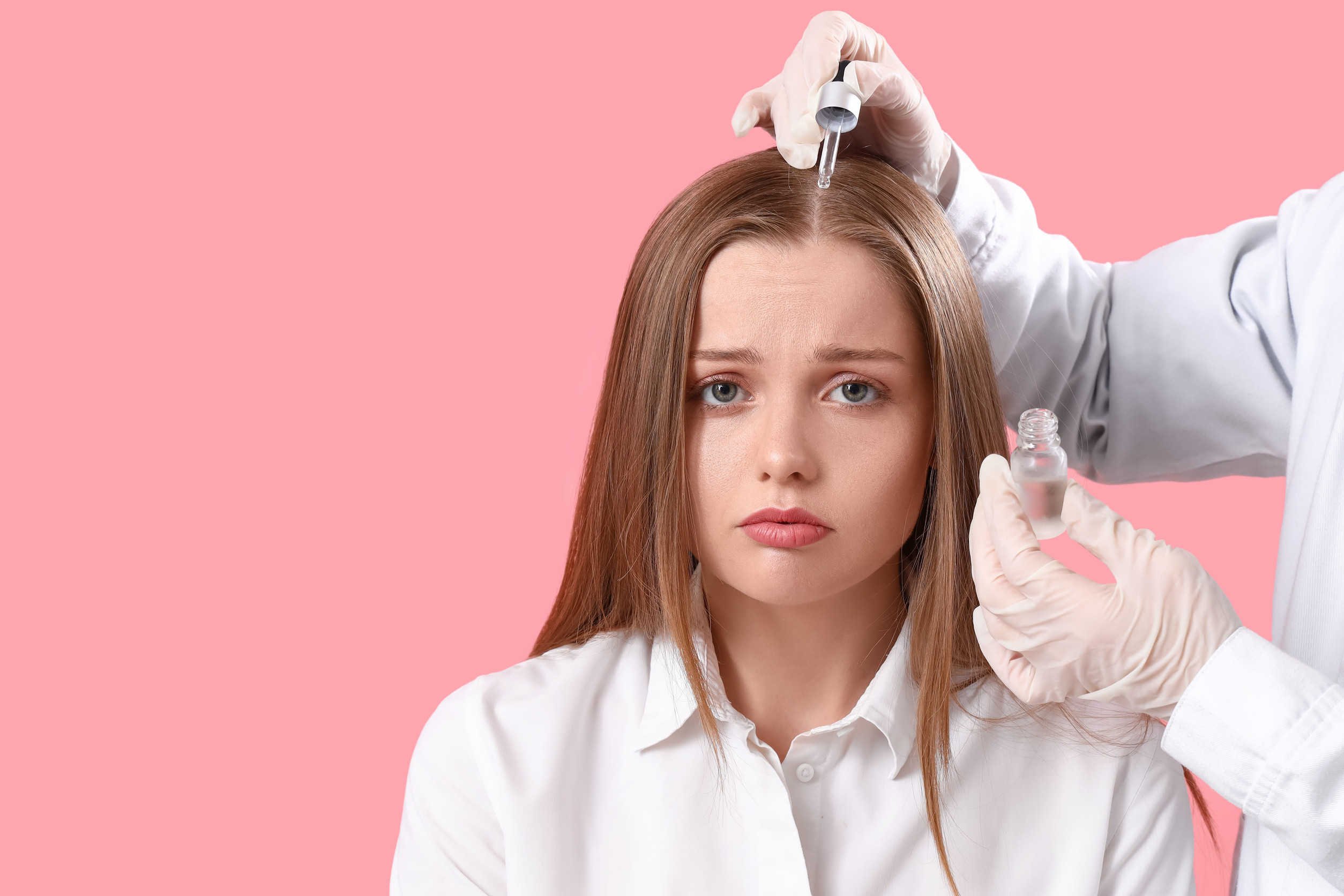
Another consequence we see in Dermatology clinic is of people presenting with hair loss.
Is this a side effect of the drug?
Yes and no. It is not thought to be a direct effect of the drug on the hair follicle, but more a consequence of rapid weight loss and possibly also a reduction in essential nutrients needed for healthy hair growth such as iron, zinc, magnesium and protein.
What can be done for the hair loss?
It might be worth looking at reducing weight more slowly, ensuring your nutrition is optimum, and maybe getting your thyroid and iron levels checked. If the levels are abnormal, it is an easy thing to getting them corrected. Also losing weight more slowly is probably better in the long run as you will be less likely to re-gain the weight lost once you come off the GLP-1 agonists.
Are there things I can put on my scalp to stimulate hair growth?
Topical minoxidil is available over-the-counter and there is a huge body of evidence showing it works in stimulating hair growth in men and women. It is available in 2% and 5% forms, though Dermatologists recommend the 5% strength.
You do have to use it consistently twice a day and for around 4-6 months to see any benefit and it may cause hair to fall out more initially and can also cause extra hair growth elsewhere or scalp irritation.
Also, it doesn’t work in everyone. It is quoted that around 40% of the population respond to minoxidil but if the minoxidil is stopped at any point, any hairs grown on the minoxidil will fall out.
Is there anything else?
If you stroll down the shampoo aisle in any big chain, high street chemist in the UK, you cannot fail to notice the plethora of hair growth shampoos that are now available.
Some have been around for a while such as Alpecin caffeine shampoo. The evidence for this is modest and most of the trials showing benefit are funded by the company producing the shampoo.
There are others that generally contain a mixture of vitamins, peptides, rosemary, zinc, biotin, none of which have a large body of quality evidence that shows they can stimulate hair growth at all.
What about aminexil?
This is a product produced by L’Oreal and can be found in products made by the L’Oreal group. This includes L’Oreal Paris Elvive Growth Booster, Kerastase Genesis , and Vichy Dercos Energising shampoos. If you happen to stroll down the shampoo aisle of a popular high street, large chain pharmacy you’ll see it in quite a few products.
It also has other names such as kopexil or diaminopyrimidine oxide and it is structurally similar to minoxidil.
How does it work?
Even though we do not fully understand how minoxidil works, we do know that minoxidil can inhibit the activity of an enzyme lysyl hydroxylase. Lysyl hydroxylase catalyses hydroxylysine, something that is needed for collagen to mature. It was found that aminexil can do the same.
[Mahe YF, Buan B, Bernard BA. A minoxidil-related compound lacking a C6 substitution still exhibits strong anti-lysyl hydroxylase activity in vitro. Skin Pharmacol 1996;9(3):177-83.]
It is thought that suppressing the activity of lysyl hydroxylase prevents fibrosis around the hair follicle. If fibrosis around the hair follicle happens, it is thought to compress the blood vessels to the hair resulting in a shortened lifespan of the hair follicle.
As minoxidil is a vasodilator, aminexil is also and it is thought to improve blood flow to the hair follicles.
[Amiri R, Mohammadi S, Azizi S et al. Evaluation of efficacy and safety profile of niosomal kopexil 1% lotion compared to niosomal minoxidil 2% lotion in male pattern alopecia. Iran J Dermatol 2023;26:68-73.]
Aminexil can also work by increasing the growth or anagen phase of hair growth, similar to the action of minoxidil. It does this by affecting the proliferation and differentiation of the hair follicle keratinocytes.
[Sawaya ME, Shapiro J. Androgenetic alopecia. New approved and unapproved treatments. Dermatol Clin 2000;18:47-61.]
Does it work in real life?
There is some evidence in humans showing benefit in mild androgenic alopecia with reduced hair loss and improved hair thickness with no scalp irritation and high subject satisfaction. This study, however, was funded by L’Oreal and conducted in private practice.
[Reygagne P, Mandel VD, Delva C. An anti-hair loss treatment in the management of mild androgenetic alopecia: Results from a large, international observational study. Dermatologic Ther 2021;34:e15134.]
There is no evidence that aminexil will induce new hair growth though.
Should I use it if I have hair loss?
That is not an easy question to answer because it depends on the type of hair loss you have and the severity of hair loss. Generalised hair loss is often due to many factors and requires a detailed history, examination and pertinent investigations to diagnose and treatments require persistence and time.
There is also a cost implication as it is not a prescribed item. If you were to give it a go, I would plump for a serum that is left on the scalp overnight rather than a shampoo which has a fleeting moment to act before it is rinsed off. And be prepared to do it for at least 6 months!
Kind regards,
Sandy
Dr Sandy Flann, Consultant Dermatologist