 I have started studying for a Diploma in something called the Exposome and the Skin. The exposome is all the environmental exposures an individual encounters through their life. I initially procrastinated for quite some weeks before committing to this because the last time I did something like this, the husband (who had to hand deliver my last thesis to London) said “Never again…”. But the children were so much younger then and this Diploma is only for 6 months with an exam only every 8 weeks or so. If it all goes terribly wrong, I can call it a day in 6 months’ time.
Anyway, the main thing is that I have found it deeply fascinating with facts being brought to light that were not even touched upon when I was at medical school 30 years ago.
I can’t possibly touch on all the topics but given it is the summer and Dermatology at this time of year is all about sun protection and skin cancers, I thought I would talk about the role of your gut microbiome and how that can affect your response to skin cancer therapies.
What is your gut microbiome?
This is the multiple microorganisms that live in our gut and contribute to our health and wellbeing. They produce short chain fatty acids that can stimulate your immune system and help prevent the growth of unhealthy bacteria.
How do I get good bacteria in my gut?
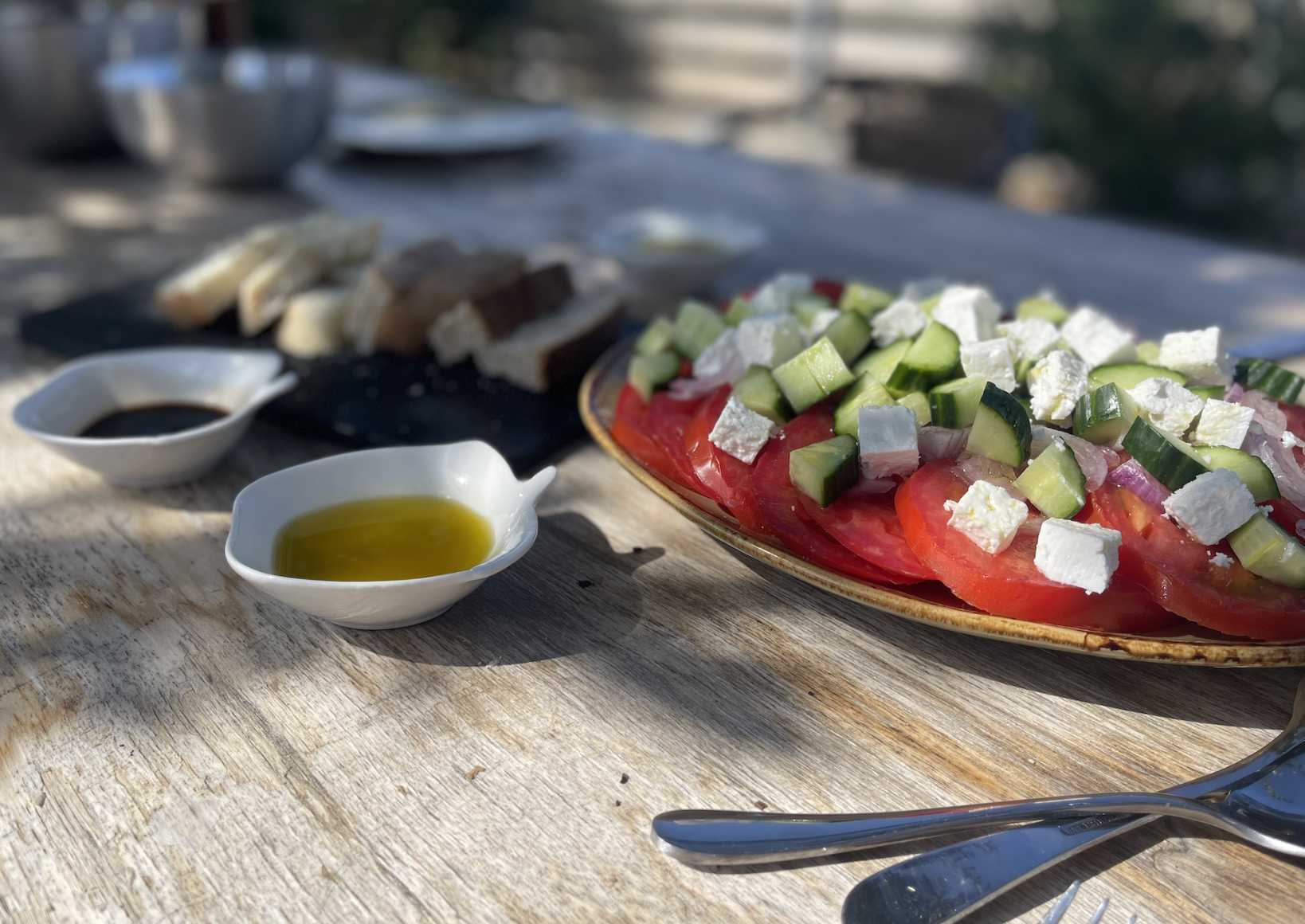
The main and best way is via your diet. A Mediterranean diet is beneficial. This is largely composed of healthy fats like extra virgin olive oil, home-cooked, fibre-rich, plant-based foods and lean proteins like fish with less reliance on processed foods, red meats and added sugars. Incorporating fermented foods in your diet helps the gut microbiome. This does not have to mean kimchi and sauerkraut, it can include yoghurt and sourdough bread instead. Trying to aim for 30 different fruits and vegetables in your diet each week is also helpful (and caffeine and spices also count towards this too – phew!)
The good bacteria in your gut rely on the fibre in your diet to grow and flourish.
Having a probiotic (live microorganisms) with a prebiotic (non-digestible food source that stimulates the growth and activity of the good bacteria) is also helpful but not as helpful as altering your diet.
What factors can reduce the number of good bacteria in my gut?
Antibiotics are the main culprit at reducing all bacteria, good and bad in the gut but there are other medications too, namely proton-pump inhibitor medications ie omeprazole, lansoprazole, pantoprazole amongst others. Stress, restrictive diets and inflammatory bowel disease can also affect the gut microbiome.
How does your gut microbiome alter your response to skin cancer therapy?
The gut microbiome has increasingly been viewed as the largest immune organ in the body.
In advanced melanoma management, the use of immune checkpoint inhibitor drugs has been revolutionary in improving survival but many patients either do not tolerate or do not respond to this therapy.
Effects of a high fibre diet
What was of interest was finding that mice on a low fibre diet or germ free mice (ie had no gut microbiome) had a poor response to immune checkpoint inhibitor therapy (ICI).
[Vétizou M, Pitt JM, Daillère R et al. Anticancer immunotherapy by CTLA-4 blockade relies on the gut microbiota. Science 2025;350:1079-1084.]
When mice received a fibre-rich diet versus a fibre-poor diet, the mice with the fibre-rich diet had delayed tumour outgrowth. However, there was no difference between the fibre-rich and fibre-poor diet in germ-free mice. This basically shows that the gut microbiome is extremely important for a fibre-rich diet to work.
[Desai MS, Seekatz AM, Koropatkin N et al. A Dietary Fiber-Deprived Gut Mictobiota Degrades the Colonic Mucus Barrier and Enhances Pathogen Susceptibility. Cell 2016;167:1339-1353.]
In humans, patients on ICI therapy for metastatic melanoma who had a high fibre diet (>20g/day) had improved progression-free survival compared to those with a low fibre diet (<20g/day), with a calculation that for every 5g increase in daily dietary fibre intake there was a corresponding 30% lower risk of progression or death.
[Spencer CN, McQuade JL, Gopalakrishnan V et al. Dietary Fiber and probiotics influence the gut microbiome and melanoma immunotherapy response. Science 2021;374:1632-1640.]
What about other dietary interventions?
The same positive association was also found with the Mediterranean diet and response to treatment with ICI for advanced melanoma.
[Bolte LA, Lee KA, Björk JR et al. Association of a Mediterranean Diet with Outcomes for Patients Treated with Immune Checkpoint Blockade for Advanced Melanoma. JAMA Oncol 2023;9:705-709.]
Can I just take a probiotic?
Commercially available probiotics (in a dry pill) were shown to have no statistically significant difference in progression-free survival in humans on ICI for advanced melanoma and also impaired the antitumour response in mice models, so the advice is that they should be avoided.
And what else can be done?
Faecal microbial transplantation from complete responders to ICI for advanced melanoma to non-responders with advanced melanoma is now being studied with some early promising results.
[Lin A, Jiang A, Huang L et al. From chaos to order: optimizing fecal microbiota transplantation for enhanced immune checkpoint inhibitors efficacy. Gut microbes 2025;17:2452277.]
Kind regards,
Sandy
Dr Sandy Flann, Consultant Dermatologist