
A rapidly growing form of skin cancer
Squamous Cell Carcinoma (SCC) Explained
What is a squamous cell carcinoma?
A squamous cell carcinoma (SCC) is the second most common type of skin cancer. It develops from the squamous cells, which form the outer layer of the skin.
Many SCCs grow slowly and remain confined to the skin, but if left untreated, some can spread to deeper tissues or other parts of the body. Early recognition and prompt treatment are therefore essential to achieve the best outcome and prevent spread.
What causes SCCs?
SCCs most often occur in areas exposed to the sun over many years, such as the face, scalp, ears, neck, hands, and lower legs. People who spend long periods outdoors for work or leisure are more likely to develop them.
Other factors can also increase risk:
Immunosuppressive medication:
Used after organ transplantation or for certain medical conditions, these drugs reduce the body’s ability to repair sun-damaged skin.
Previous radiotherapy or sunbed use.
Exposure to tars, chemicals, or certain viruses.
Long-standing ulcers or areas of chronic skin damage.
Although most SCCs result from sun exposure, they can occasionally occur on skin that has not seen much sun, particularly in people with reduced immune function.
What does an SCC look like?
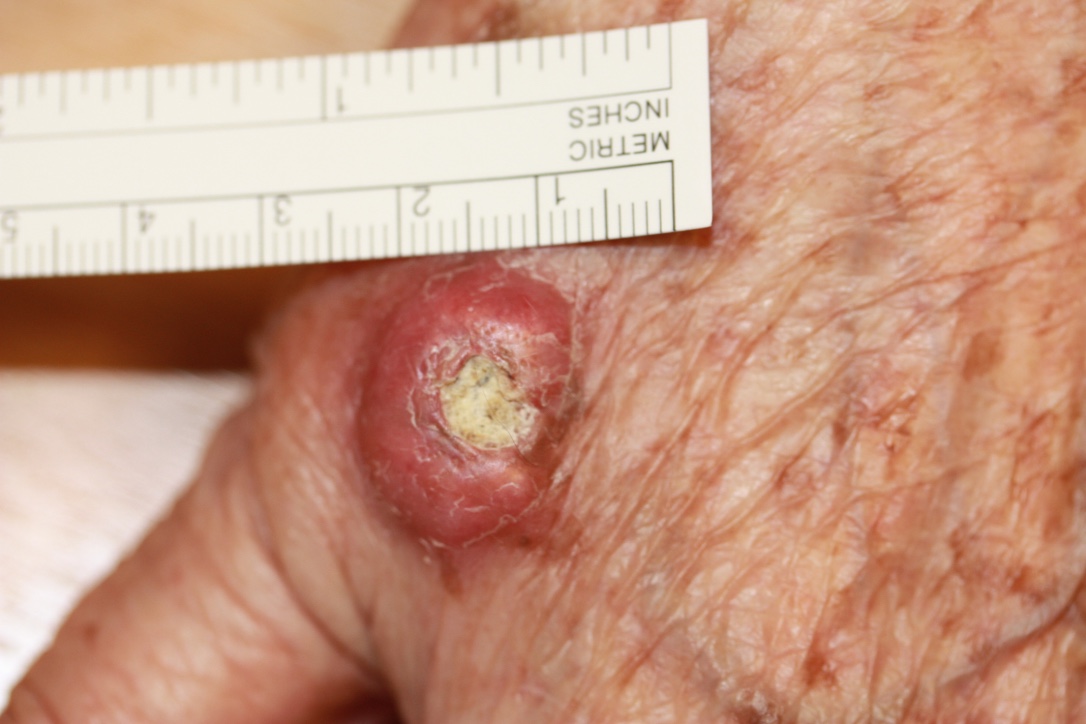
A typical SCC appears as a crusty, scaly, or warty lump on an area of sun-damaged skin. It may be red, raised, or tender to touch and sometimes grows quickly. Some SCCs can ulcerate (form an open sore), while others grow more slowly and cause little discomfort.
Because appearances can vary, any persistent or changing patch, lump, or sore that does not heal should be examined by a dermatologist.
How are SCCs treated?
Treatment depends on the size, location, and type of SCC, as well as your general health. The two main options are surgery and radiotherapy.
Surgical treatments
Curettage and cautery
The SCC is gently scraped away under local anaesthetic, and the base is cauterised (burnt) to destroy any remaining cancer cells. This is usually reserved for small, slow-growing SCCs or for patients unable to tolerate a larger procedure.
Excision
The lesion is cut out under local anaesthetic, and the wound is repaired with stitches. This is the most common treatment and usually curative.
Plastic surgery reconstruction
For larger SCCs or those in delicate areas such as the face or hands, skin flaps or grafts may be required to achieve the best functional and cosmetic result.
Radiotherapy
Radiotherapy may be recommended for patients who are not suitable for surgery or when surgical removal might cause significant scarring or functional problems. It involves several short treatments over a few weeks and can be highly effective.
What happens after treatment?
All SCC cases are discussed at a multidisciplinary team (MDT) meeting, where your dermatologist, surgeon, oncologist, and pathologist agree on the best treatment and follow-up plan.
In most cases, once treated, SCCs are completely cured, particularly when diagnosed early. However, because some can recur or new lesions can develop, ongoing monitoring is important.
Follow-up arrangements will depend on your individual case and the characteristics of your SCC. Your dermatologist may recommend periodic reviews or, in some cases, imaging scans to ensure there is no sign of spread.
Patients taking immunosuppressive medication require long-term follow-up, usually in a specialist clinic at their transplant centre.
Looking after your skin
After treatment, it’s important to:
Check your skin regularly
for any new or changing growths.
Protect your skin from the sun
by using sunscreen (SPF 30 or higher), wearing protective clothing, and avoiding midday sun exposure.
Avoid sunbeds
and other sources of artificial UV light.
Early detection and ongoing skin care are key to preventing further SCCs and maintaining long-term skin health.